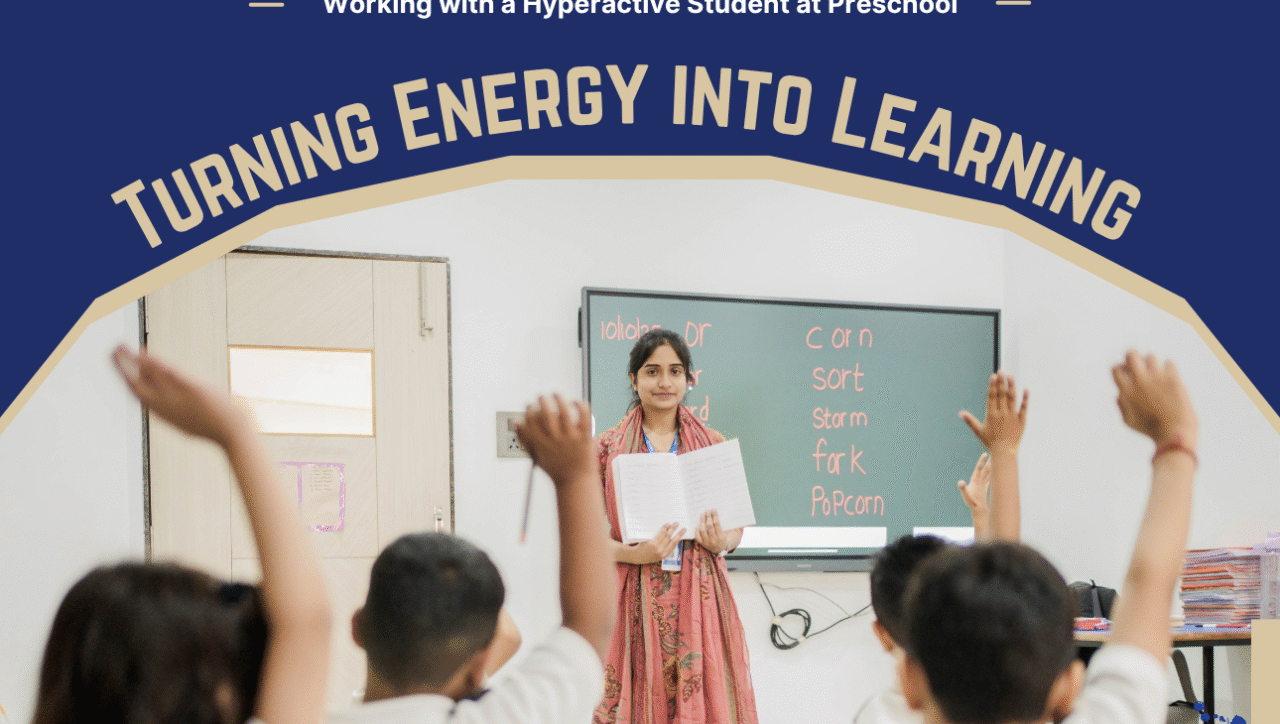
In every classroom, some children stand out not because of poor performance but because of their excessive energy and restlessness. This is a case study of a young boy who was always on the move, found it difficult to follow instructions, and rarely stayed seated. However, with understanding, creativity, and patience, his teacher was able to convert his boundless energy into a powerful learning tool.
Identifying the Challenge
The child was bright and curious but overly active. He frequently interrupted lessons, got distracted easily, and avoided seated tasks. Traditional classroom methods failed to capture his attention for more than a few minutes. Recognising that his behaviour stemmed more from his high energy than defiance, his teacher decided to take a different approach.
Building on Interest
Instead of forcing him into typical learning patterns, the teacher observed the activities he enjoyed. He loved building blocks, playing with flashcards, and counting physical objects. Using these preferences, the teacher designed lessons that engaged his natural enthusiasm:
- Making structures with blocks to teach problem-solving and focus.
- Forming words and sentences with flashcards to build language skills through movement.
- Counting real-life objects and fingers to make math interactive and tangible.
These activities gave him the movement and engagement he needed while ensuring meaningful learning took place.
The Transformation
Gradually, the child’s concentration improved. He began sitting for longer durations, completing tasks with interest, and following instructions more consistently. By aligning educational goals with his personal preferences, his teacher turned his energy from distraction into participation.
Lesson for Educators
This case reminds us that every child learns differently. When teachers adapt lessons to a child’s natural inclinations, learning becomes joyful and productive. Hyperactivity, when channelled correctly, can become a source of creativity, focus, and academic growth.