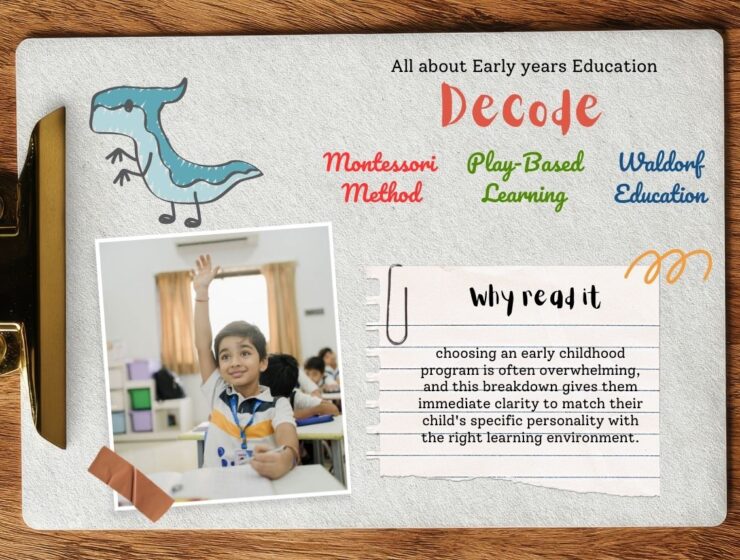

Children are natural explorers. From the moment they start grasping, building, and imagining, they are learning not from textbooks but through play. This instinctive curiosity forms the foundation of experiential learning, an educational approach that empowers children to learn by doing. In an era where adaptability, creativity, and emotional intelligence are just as important as academic knowledge, learning through play has become more than just fun — it’s a vital pathway to developing confident, capable young minds.
The Power of Experiential Learning
Experiential learning is rooted in the philosophy that experience is the best teacher. At Bubbles, children actively engage with materials, concepts, and real-world scenarios, rather than passively absorbing information. Whether it’s building a bridge with blocks, planting seeds in a garden, or conducting a mini science experiment, children reinforce what they know by applying it. This hands-on engagement transforms abstract ideas into lived experiences, making learning meaningful and long-lasting. At Bubbles, children develop critical thinking skills by doing experiments, taking risks, and seeing the results of their actions. This mindset built early through play plants the seeds of resilience and curiosity that will serve them for life.
Why Play Is a Child’s First Classroom
Play is a universal language of learning. It allows children to explore their interests, express emotions, and develop social connections. During imaginative play children learn cooperation, empathy, and negotiation. They practice leadership and teamwork, often unconsciously building the communication skills that will define their future interactions. Here’s how different forms of play nurture essential competencies:
- Constructive play (using blocks, puzzles, or creative materials) fosters awareness, problem-solving, and fine motor skills.
- Imaginative play (pretend games, role-playing) enhances language development, self-expression, and emotional understanding.
- Physical play (running, climbing, or sports) strengthens motor coordination, discipline, and perseverance.
- Collaborative play (group games or shared projects) builds empathy, conflict resolution abilities, and teamwork.
The Confidence Connection
Confidence arises when children trust their abilities and judgment. Experiential learning nurtures this trust naturally. When a child experiments with a new concept, for example, mixing colours to create new shades or figuring out how to balance a seesaw, they experience firsthand the rewards of perseverance and insight. Each small success boosts their sense of capability. At Bubbles with the help of Jolly Phonics kids are able to read and write all the things without any difficulty. Moreover, they build self-efficacy, the quiet confidence that one can influence outcomes through effort and insight. In classrooms emphasising experiential learning, children are less afraid to ask questions, challenge ideas, or propose creative solutions. They learn not just what to think, but how to think.
Role of Educators and Parents
The role of educators and parents is to create environments rich in opportunities for exploration. Instead of handing children answers, they can ask guiding questions such as, “What do you think will happen if we try this?” or “How could we do this another way?” Encouraging children to reflect on their actions, what worked, what didn’t, and why helps them make sense of their experiences. Reflection turns play into understanding, deepening the learning process.
Beyond the Classroom
Experiential learning doesn’t end when the school bell rings. Everyday moments cooking with family, exploring nature, building crafts, or even grocery shopping can become rich learning experiences. When children measure ingredients, count change, or identify plants, they connect lessons from formal education to the real world. In a rapidly changing world, these connections are invaluable. Future-ready learners need more than memorised facts; they need adaptability, critical thinking, and a confident approach to problem-solving. Learning through play nurtures exactly these qualities.
A Future Shaped by Play
Play-based experiential learning reminds us that joy and education are not opposites but partners. When children learn through curiosity and action, learning becomes a lifelong adventure rather than an obligation. They develop more than knowledge; they gain confidence, empathy, and the courage to explore the unknown. As we shape the next generation of thinkers and leaders, embracing experiential learning ensures we are not just teaching facts but nurturing imagination. After all, confident young minds are not built through instruction alone; they are built through exploration, discovery, and the freedom to play, learn, and grow.